




Julius “Jules” Wenglare (W6YO), born in the United States in 1911 and deceased in 1998, was one of the notable DX operators in the history of amateur radio. He received his first amateur radio license in 1930 under the callsign W8DVS. In 1936, he is recognized as the first amateur radio operator to work and confirm 100 countries while using less than 100 watts of power. In 1939, he became the first U.S. (“W”) station to work all 40 CQ Zones. Wenglare was involved with the DXCC program from its early years, held DXCC Certificate No. 23, and had confirmed 356 countries by the end of his life.
During World War II, Wenglare served with the Army Airways Communications System (AACS), where he worked primarily on the maintenance of transmitters and communications systems. Toward the end of the war, he was part of an advanced group of communications specialists tasked with establishing radio communications for U.S. aircraft bringing troops into Japan for the occupation. After his military service, he continued his career in communications with the Voice of America (VOA). Wenglare was also deeply interested in antenna design and is reported to have designed and built approximately 100 different antennas.
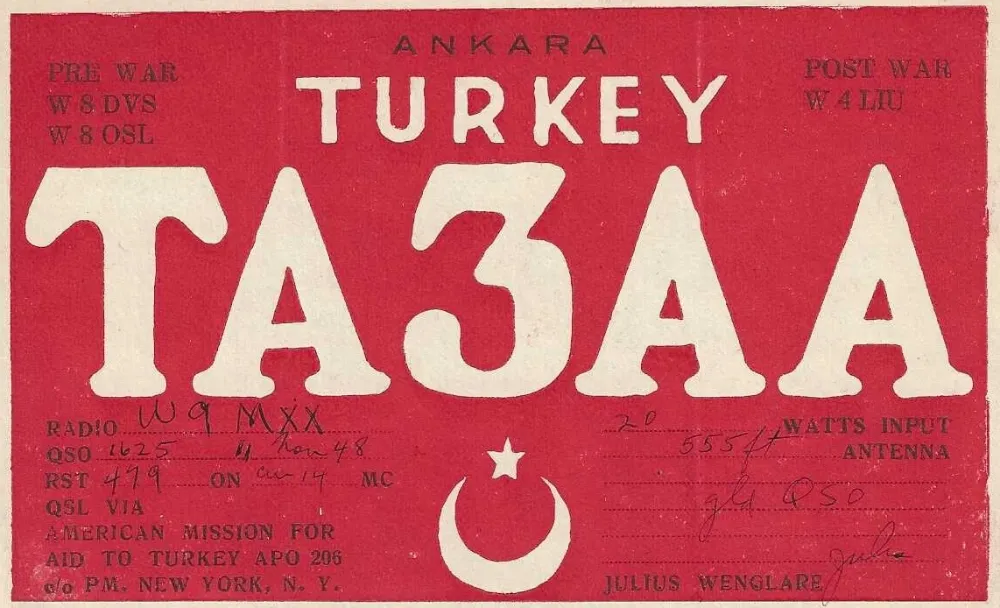
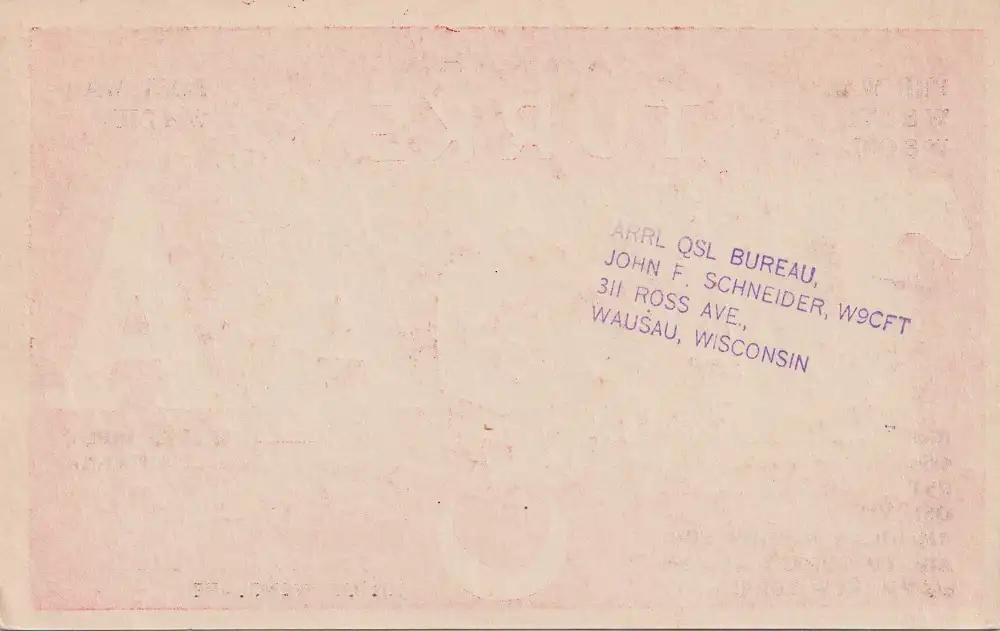
In 1977, Wenglare continued his amateur radio activities during a round-the-world voyage aboard the Yankee Trader, operating from 45 different countries. In Türkiye, he operated under the callsign TA3AA from both İzmir and Ankara. The 1948 TA3AA Ankara QSL card in the QSL Museum collection is one of the important historical documents relating to Wenglare’s amateur radio activities in Türkiye. At a time when high-power operation was common, the card shows that he made QSOs using only 20 watts of output power.
A member of the ARRL for 26 years and one of the founding members of the Central California DX Club, Jules Wenglare passed away on August 16, 1998. The callsigns he used, his DXCC achievements, and his operations from different parts of the world have made him one of the notable figures in the history of amateur radio and DXing.